
Building a Creative Supply Chain to Win on Meta Post-Andromeda

-
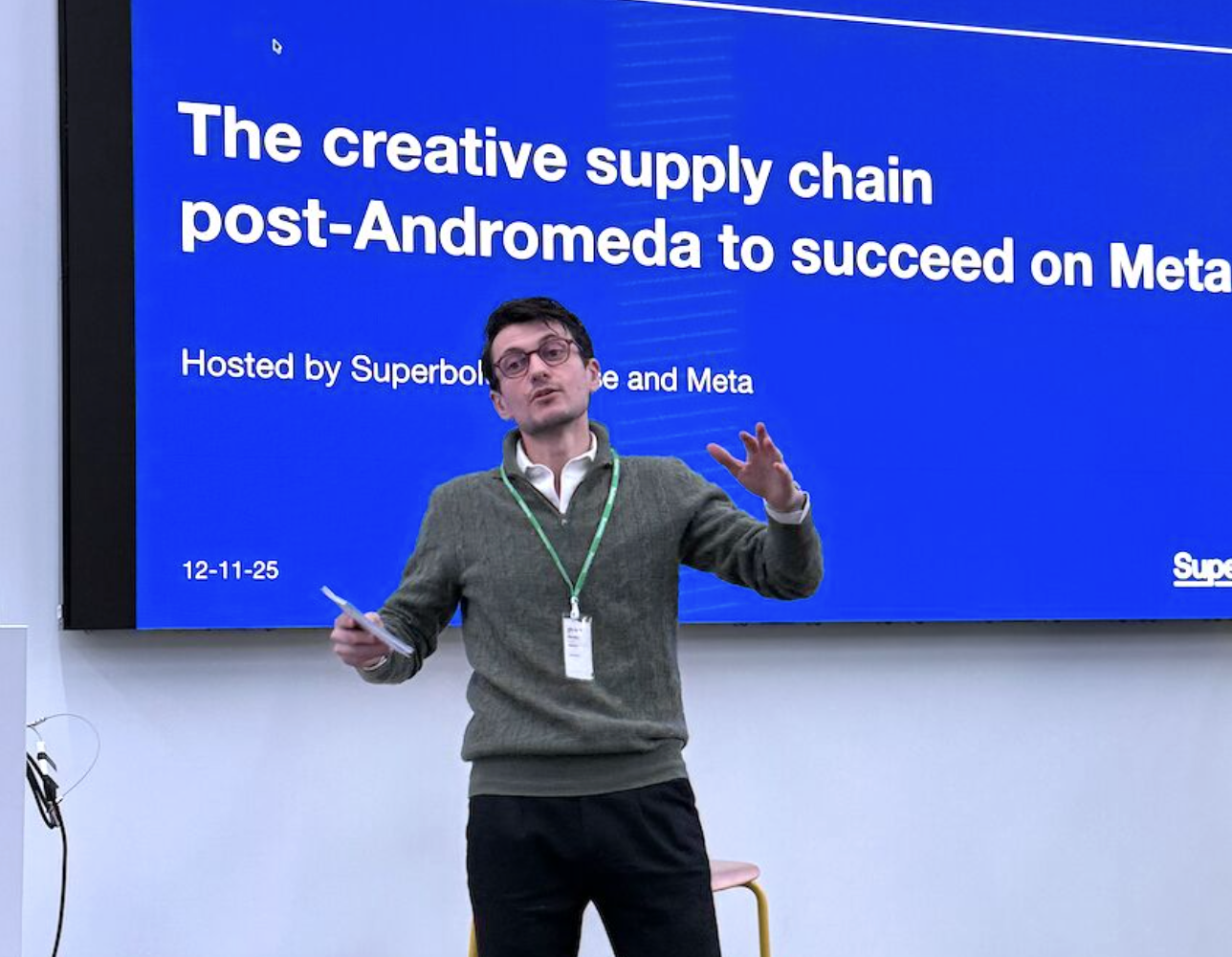
Following our December event co-hosted with Meta and Insense, we wanted to synthesize one of the strongest themes that emerged from the conversations: creative performance on Meta today is no longer about “making more ads.” It’s about building a creative supply chain that can consistently produce the right diversity, at the right time, with the right feedback loops.
-
-
The Post-Andromeda Reality: Introducing Creative Diversity
Over the past year, Meta’s Andromeda updates have materially changed how advertisers should think about creative. The algorithm has become significantly better at:
- Interpreting visual signals
- Matching creatives to users and moments (i.e. capturing relevant intent)
- Scaling winning concepts across placements and audiences
But that also means performance is increasingly constrained by one thing: the creative system behind the ads.
When performance slows, the issue is rarely “we need to spend more” or even “we need more ads.” More often, it’s that the creative supply chain can’t produce enough meaningfully different assets to feed the new algorithm.
-
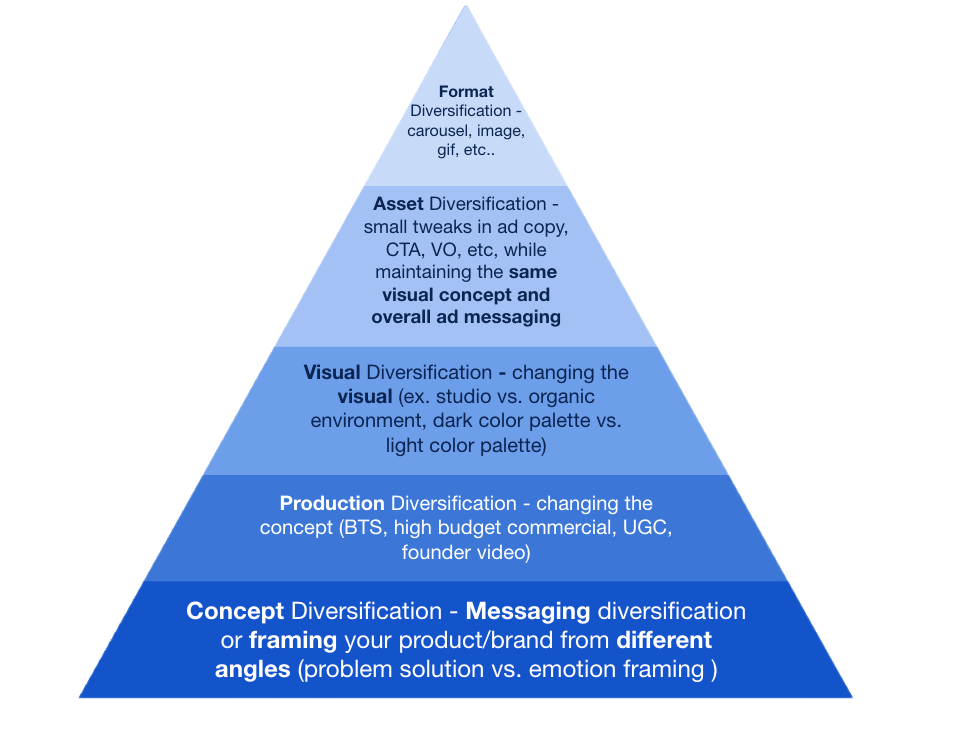
Importantly, creative diversity is not created through minor copy tweaks or cosmetic visual changes. What moves performance is diversity across strategic dimensions: distinct value propositions, different emotional and functional angles, multiple formats and perspectives (brand, creator, customer), and creatives designed for different stages of the funnel - not just conversion.
-
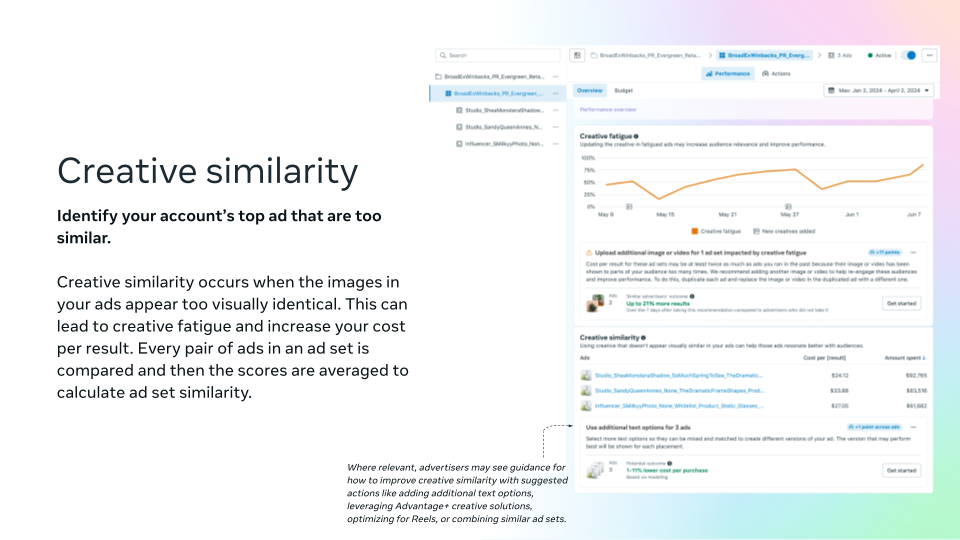
Meta has a bias toward visual diversity, not raw volume. This is why they have a “similarity score” - to help advertisers assess the diversity of their creatives beyond just raw volume.
-
Creative volume still matters and planning appropriately is a pre-requisite
One of the most common questions we get is deceptively simple:
“How many creatives should we be producing?”
Our answer is usually somewhat unsatisfying - but important. Based on what we see across accounts today, increasing volume without increasing diversity often backfires. Teams end up making minor copy tweaks, small visual changes or compromises to brand positioning just to hit a number.
That’s why we don’t think about volume as a static KPI. Instead, we think about planning for volume.
-
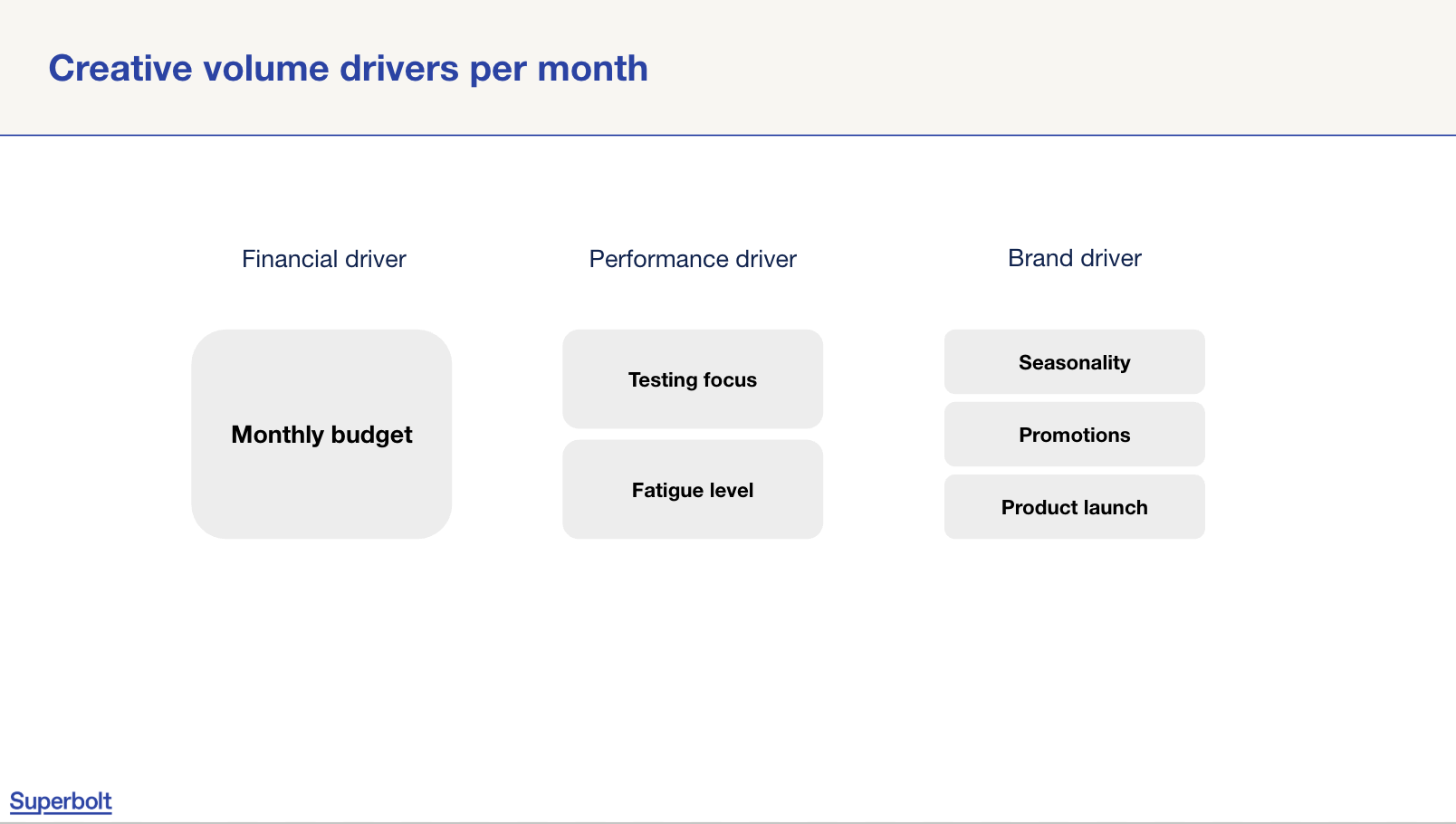
At Superbolt, we work with brands to anticipate creative needs over time, rather than reacting when performance drops. We use a planning framework that looks at six core inputs - spanning financial, performance, and brand drivers - to build an annual creative plan.
-
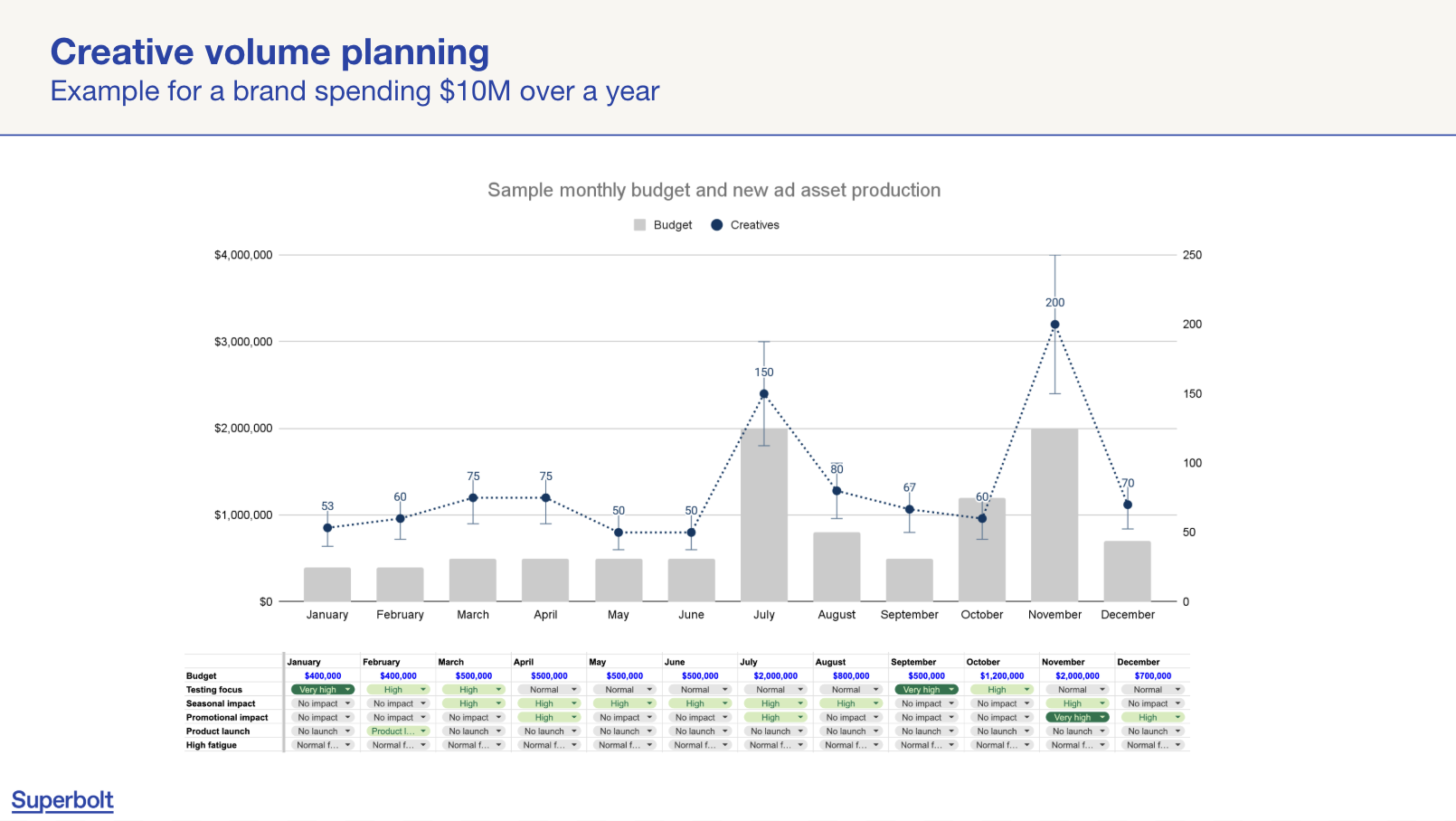
The goal isn’t to flood the account with ads. It’s to ensure the right resources are available, the team is prepared for high-intensity moments (BFCM, holidays, launches) and quality never gets sacrificed under pressure.
-
Volume matters but what drives performance is mostly diversity
-
Building a Robust Supply Chain to deliver on Creative Diversity
Ultimately, creative diversity is not a creative trait - it’s a system outcome. Sustained performance comes from designing a creative supply chain that consistently produces new, differentiated inputs while preserving quality and brand integrity. Diversity is the output. The system behind it is the lever.
When the conversation shifted to how to actually produce that volume, the framing changed entirely.
Our founder’s background is in engineering and operational research - fields obsessed with optimizing supply chains. So when brands ask how to increase creative output, our instinct isn’t to ask for more ideas. It’s to ask: “what does the supply chain behind creative actually look like?
-
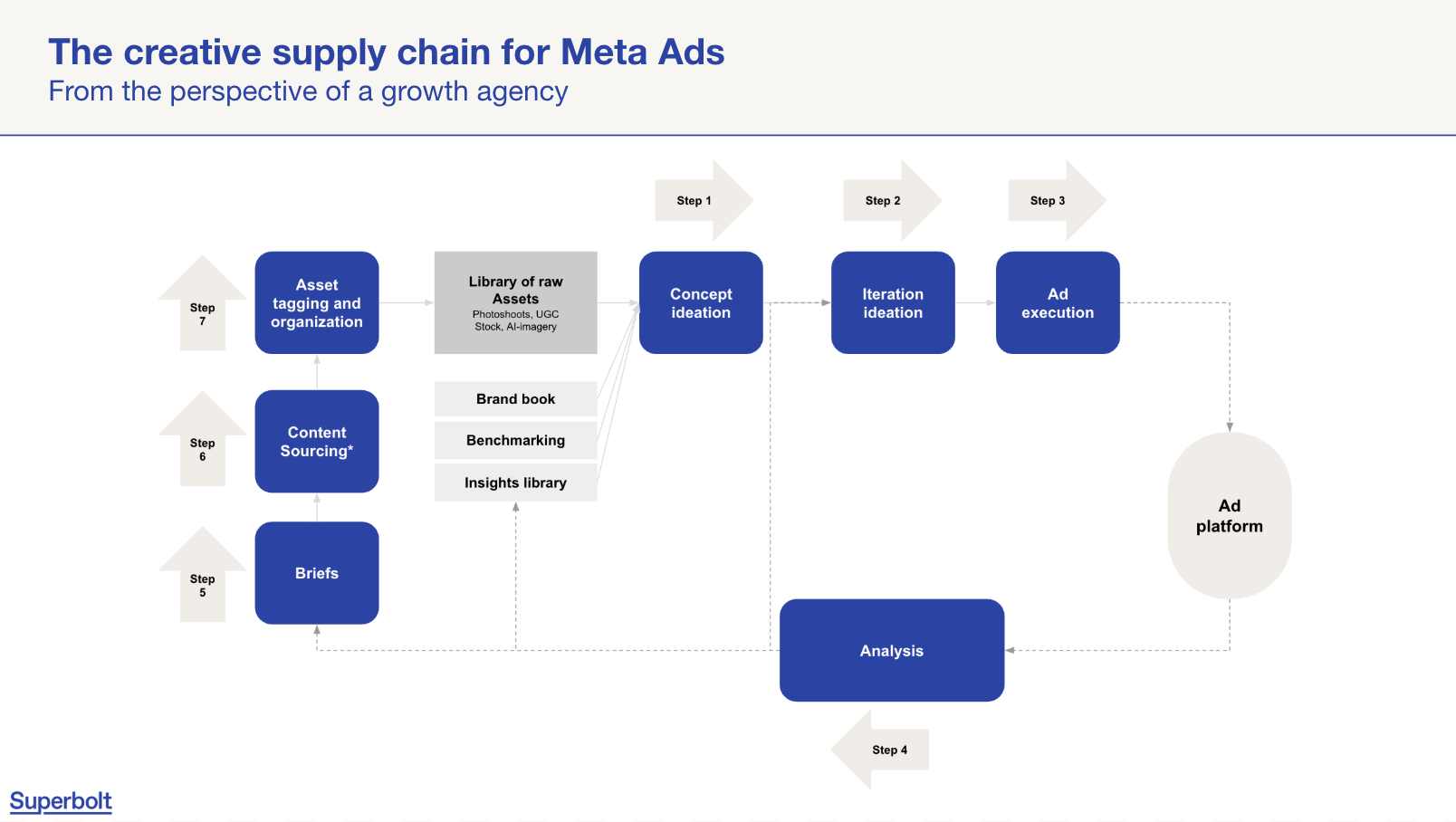
When we mapped it out from an agency perspective, a clear system emerged:
- 4 core inputs
- 7 distinct steps
- Multiple handoffs, dependencies, and feedback loops
-
Once you see creatives this way, a powerful diagnostic tool appears. If diversity scores are low, performance suddenly plateaus or “nothing seems to work anymore” the question becomes: where is the bottleneck in the supply chain?
-
Where Creative Supply Chains Usually Break
Across audits and client work, we see a few recurring failure points:
1. Broken Feedback Loops
In some organizations, performance learnings never make it back to the creative teams in a usable way. Media teams see patterns; creative teams don’t. The result is repetition instead of evolution.
2. Execution Bandwidth Constraints
Other brands have great ideas - but limited execution capacity. Internal teams are stretched across brand, site, email, and ads, creating a bottleneck even when strategy is sound.
3. Partial Ownership of the System
Historically, many agencies (including us) focused on the early stages: strategy, testing frameworks, and insights. But performance today is the output of the entire system.
That’s why, over the past year, we expanded our involvement: taking responsibility in all areas (even including tagging assets and organizing our clients asset libraries), recommending and integrating best-in-class partners and closing the loop between performance data and creative production.
Because when you’re accountable for results, you can’t afford broken links in the chain.
-
Conclusion: Why having a Robust Creative Supply Chain has become a strategic differentiator to win on Meta
For brands advertising on Meta today, creative supply chain design is no longer an operational footnote. It’s a strategic lever.
Teams that win aren’t necessarily the ones making the most ads. They’re the ones that:
- Plan for creative needs ahead of time
- Build systems that support real diversity
- Ensure insights travel quickly from performance to production
- Treat creative as a scalable system, not a series of one-off projects
Post-Andromeda, Meta’s algorithm will do its job - but only if it’s fed the right inputs. The real question becomes whether your creative supply chain is built to deliver them.
Get in touch with us.
We are headquartered in New York.
New York City
225 Broadway, Floor 41
10007